Home/Resources/Blog
27 July 2026
Gerber files are an essential feature of printed circuit board (PCB) assembly or manufacturing, which serves as an industry-standard format for conveying detailed design information to manufacturers. These files translate complex PCB designs into a language that fabrication machines can understand so that every layer of the board-from copper traces to solder masks can produced accurately.
27 July 2026
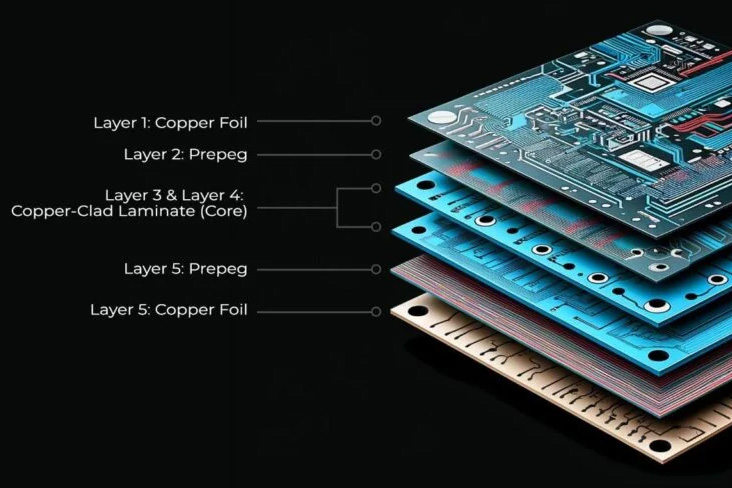
The printed circuit board (PCB) technology has evolved over the years, enabling the shift from single-layer designs to multilayer configurations. This innovation has paved the way for powerful electronic devices, revolutionizing industries with compact yet high-performance solutions
27 July 2026
The printed circuit board (PCB) technology has evolved over the years, enabling the shift from single-layer designs to multilayer configurations. This innovation has paved the way for powerful electronic devices, revolutionizing industries with compact yet high-performance solutions.
27 July 2026
Reducing time-to-market (TTM) is a key factor for businesses to stay ahead in the competition. Across industries such as consumer electronics, medical devices, and automotive, companies must rapidly prototype and test products to meet tight deadlines.
27 July 2026
The shift from 5G to 6G technology is not just a leap in speed but also a significant change in how PCBs are designed, manufactured, and assembled to meet the demands of modern electronics. One area where this change is most felt is in PCB assembly for high-frequency circuits.
27 July 2026
In printed circuit board design, copper thickness is one of the most critical factors influencing electrical performance, thermal behavior, durability, and manufacturing cost. With incorrect copper weight, the board struggles with overheating, voltage drop, or fabrication challenges.